
A low-maintenance garden isn’t without plants or character. It’s planned around suitable planting, efficient watering and practical surfaces to reduce routine care. A well-designed space may need attention only a few times a year, rather than work every week during the growing season.
That’s a welcome change when weeding, watering and mowing take more time than you’d like. The key is to make choices that work together: plants suited to your garden, mulch over bare soil and hard landscaping that makes the layout easier to manage. This guide explains how irrigation and robotic mowers can reduce regular tasks, where paving, gravel or decking can help, and how thoughtful design and installation support the finished garden. You’ll also learn how to balance less upkeep with the colour, texture and comfort that make a garden enjoyable.
Key Takeaways
- Choose hardy shrubs and evergreens suited to your garden’s conditions to create lasting interest with less routine care.
- Explore automatic irrigation and robotic mowers to reduce regular watering and grass-cutting tasks.
- Use paving, gravel or decking thoughtfully to shrink demanding lawn areas and make the garden easier to manage.
- According to the UK Government, mulch at least 5cm (2in) thick, applied from late autumn to late winter (Nov-Feb), can help reduce soil water loss and suppress weeds.
- Plan the layout and installation around drainage, access and how you want to use the garden to help prevent avoidable upkeep.
1. What is a Low-Maintenance Garden?
A low-maintenance garden is planned to need less regular work, not to be completely maintenance-free. A high-maintenance garden may need work every week during the growing season, while a low-maintenance garden may need attention only a few times a year. The best low maintenance garden design starts by identifying the jobs that take the most effort, such as mowing a difficult lawn or weeding crowded beds.
Hardy shrubs and evergreen plants provide structure without the annual replacement of seasonal bedding plants. Choose a small mix with varied shapes, leaf colours and flowering seasons, then use groundcover between plants to help suppress weeds. Slow-growing shrubs may need pruning less often than fast-growing varieties. Together, these choices make planting easier to manage without leaving the garden bare.
Match each plant to its site before buying. Check whether the bed is sunny or shaded, exposed or sheltered, and whether the soil dries quickly or stays damp. Lavender, for example, thrives in a sunny garden with dry soil. Planting it in damp shade can leave you replacing struggling plants, so a simple site check is a useful first step in low maintenance garden design.
For year-round interest, combine evergreen structure with deciduous shrubs, which usually lose their leaves in autumn. Add perennials for seasonal flowers and ornamental grasses for texture. Most ornamental grasses need cutting once a year, in late winter. The RHS Award of Garden Merit can help you identify varieties likely to do well in ordinary garden conditions when choosing reliable plants.
How much does low-maintenance garden landscaping cost in the UK? The cost depends on the garden’s size, existing condition, chosen materials, planting and work required; the price is given after a quote request. A planting refresh has different requirements from changing the layout or surfaces.
What are the key principles of low-maintenance garden design? Match plants to the site, keep the planting palette manageable, cover bare soil and plan practical access. These choices help reduce avoidable watering, weeding and trimming.
How can I design a low-maintenance garden for a small space? Use a few well-chosen shrubs, evergreen structure and groundcover instead of many small pots or short-lived bedding plants. Large pots generally need watering less often than small patio pots.
Which native plants and wildlife-friendly features need little upkeep in the UK? Choose native plants suited to the soil and light, and include flowering plants for seasonal interest. A varied but simple planting plan can support wildlife without frequent replanting.
What are common mistakes and risks? Avoid choosing plants for appearance alone, crowding too many species into one bed, or using invasive plants that spread beyond their space. A finely manicured lawn and bare soil can also add mowing, weeding and watering.
2. Automatic irrigation and robotic lawn mowers
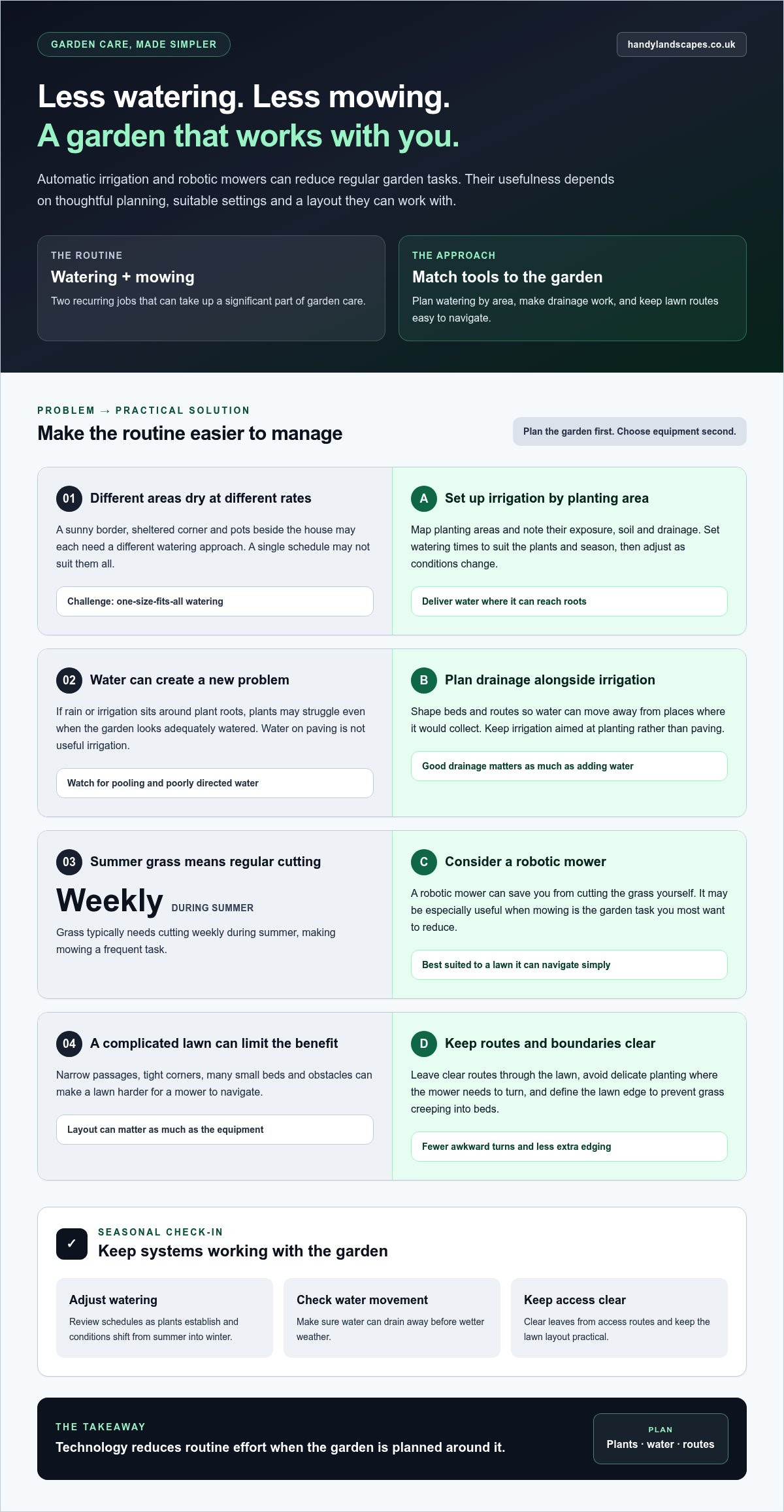
Watering and mowing can take up a significant part of garden care. Automatic irrigation can water different areas at set times, helping keep plants supplied without relying on a hose and a daily reminder. It works best when the system reflects the needs of each bed. A sunny border, a sheltered corner and pots beside the house may dry at different rates, so plan their watering separately.
Start by mapping planting areas and noting their exposure, soil and drainage. Position irrigation to deliver water where it can reach roots, rather than treating every part of the garden alike. Set timings to suit the plants and season, and adjust them as conditions change. Smart garden sensors can track soil moisture, sunlight, temperature and humidity, providing useful information before you change a watering schedule.
Good drainage matters as much as adding water. If rain or irrigation sits around roots, plants may struggle even when the garden looks adequately watered. Shape beds and routes so water can move away from areas where it would collect, and avoid directing irrigation onto paving. Balancing irrigation and drainage helps plants thrive without turning watering into a cycle of correcting one problem with another.
Grass brings its own routine. It typically needs cutting weekly during summer, so a robotic mower can save you from cutting it yourself. This can help if mowing is the garden task you most want to reduce. Before choosing one, consider the lawn’s shape, narrow passages, edges and obstacles. A simple lawn is easier for a mower to navigate than one broken up by many small beds and tight corners.
Consider how the mower and irrigation fit into the whole layout. Keep routes through the lawn clear, and avoid placing delicate planting where a mower needs to turn. Mark the lawn boundary clearly so grass doesn’t creep into beds and create extra edging or weeding. These details matter as much as the technology: equipment can reduce routine effort, but a complicated layout can limit its practical benefit.
Seasonal planning helps keep both systems useful. Review irrigation as plants establish and as conditions shift from summer into winter, rather than leaving one schedule unchanged. Clear leaves from access routes and check that water can drain away before wetter weather. For a garden design that brings planting, lawn shape and practical routes together, explore garden design planning.
3. Decking, paving and hard landscaping
Hard landscaping can make a garden easier to organise by giving lawns, borders and seating clear edges. In a small UK garden without children, replacing lawn with borders and a paved, gravelled or decked area may require less work than maintaining a small lawn. Keep some space for flowers and greenery, then choose surfaces to suit how you use the garden in summer.
Start with the tasks you want to reduce. A permanent edge between lawn and border means less trimming each time you mow. Paving or edging materials can also define beds without frequent border repairs. These details bring order to the layout and reduce awkward corners where grass, weeds and loose materials meet.
Material choice affects future upkeep. Porcelain paving can be kept looking good with an annual pressure wash. Softwood decking typically needs treating every year or two, so include that work in your decision. Timber sleepers can form a raised border, but softwood sleepers used as garden edging may rot and need replacing within five to ten years. A material that looks simple when installed can still bring maintenance later.
Gravel lets water pass through and can suit informal paths or seating areas, but it may need raking and replenishing. Paving creates a firm, defined route, though weeds can grow in the joints. Decking offers a warm surface for sitting, but its boards need periodic care. Artificial grass avoids mowing, but the British Association of Landscape Industries notes that its longevity depends more on installation quality than product specification. Natural lawn feels soft and can have flowers at its edges, but typically needs cutting weekly during summer.
What are the pros and cons of artificial grass, gravel, paving and lawn? Artificial grass avoids mowing but relies on good installation; gravel is flexible but can shift, paving is firm but joints may need weeding, and lawn feels natural but needs regular cutting. Choose by balancing comfort, drainage, appearance and the upkeep each surface brings.
Plan water movement before choosing a surface. Direct runoff away from the house and avoid low spots where rain can collect; drainage problems can undermine otherwise durable paving. The Horticultural Trades Association identifies drainage as fundamental and says many maintenance problems trace back to inadequate water management during construction.
What UK planning rules apply to garden paving, drainage and garden structures? Requirements depend on the property, location and proposed work. Establish which permissions or drainage requirements apply to the specific design before fixing the layout. Relevant details include the surface, water management and any structures in the project.
For lasting results, connect paving, lawn and borders in one practical plan. A straight route between the back door and seating area, for example, is easier to use and maintain than scattered stepping stones through several small beds. Good hard landscaping makes the garden work as a whole, not just as a collection of surfaces.
4. Mulching to reduce weeds and watering
Mulch covers bare soil with a protective layer, helping suppress weeds and reduce water evaporation. Bark chippings and gravel are practical materials for garden borders, but create different finishes. Bark brings a softer, natural look, while gravel gives beds a crisp, decorative surface. Either can make bare patches less visible and reduce time spent weeding between plants.
Apply mulch at least 5cm (2in) thick from late autumn to late winter (Nov-Feb), according to the UK Government. This can help reduce soil water loss and suppress weeds. Spread it across the exposed soil between established plants, keeping the layer even rather than leaving gaps. Recheck the border after settling, especially where rain or foot traffic has moved the material.
Use mulch as part of a clear border plan. First remove existing weeds, then cover open soil around plants without burying their stems or foliage. This leaves less bare ground for weeds to establish and can help soil retain moisture during growing periods. Keep paths and paving clear of loose bark or gravel so the surface stays tidy and easy to use.
Garden compost has two useful roles: it can feed plants and help dispose of garden waste. Add suitable compost to borders as part of the planting plan, then cover the soil with mulch. A rotating compost drum means you don’t need to turn compost with a fork, making the process simpler. Use garden waste thoughtfully, and avoid putting diseased plant material into compost intended for garden beds.
Xeriscaping uses plants suited to the local environment and aims to prevent water evaporation or runoff. In practice, combine resilient planting with soil cover and water management. For example, a sunny border with plants suited to dry conditions can pair with gravel mulch, while a shadier bed may suit different plants and bark. Matching materials and planting to the site helps reduce unnecessary watering.
Mulch can support colour and texture without filling every bed with seasonal displays. Use a consistent material across a border, then let shrubs, evergreen foliage and flowers provide contrast. Keep the design simple so you can spot weeds early and top up areas where soil becomes exposed. These practical maintenance garden ideas focus on preventing repetitive work, not simply hiding it.
For a manageable routine, inspect mulched borders as you weed or water. Remove new weeds before they spread, check that plants remain clear of excess material, and refresh thin patches when needed. Bark and gravel won’t eliminate every garden task, but covering bare soil gives each bed a better starting point. Combined with suitable planting and compost, this approach helps keep borders attractive with less frequent intervention.
5. Professional garden design and installation
A garden plan turns maintenance goals into decisions about layout, surfaces, planting and water flow. Begin by listing the jobs you want to reduce, such as mowing, edging or carrying water to distant beds. Then map sunny and shaded areas, existing paths, doors and drainage points. These details connect practical garden ideas with the way you use the space.
Planning before planting can help prevent impulse purchases at the garden centre. A clear planting plan shows how each bed will look as plants mature, where access is needed and which areas need groundcover. It also helps you avoid overcrowding plants or leaving awkward strips that are difficult to mow. For example, group plants with similar light and moisture needs, then keep a clear route between beds.
Installation quality matters because hidden groundwork affects future maintenance. The Horticultural Trades Association identifies drainage as fundamental and says many maintenance problems trace back to inadequate water management during construction. Before adding paving or raised beds, consider where rain will flow and whether water could collect beside buildings or planting. Good planning connects surfaces, levels and planting rather than treating each as a separate job.
Artificial grass is another case where preparation matters. The British Association of Landscape Industries notes that its longevity depends more on installation quality than product specification. That makes the base, edges and drainage part of the design decision, not details to leave until the final stage. The same principle applies to paths and patios: a well-planned foundation helps surfaces stay usable and reduces avoidable repairs.
Think through seasonal upkeep before work begins. Deciduous trees and shrubs drop leaves in autumn, so consider where they’ll fall and whether nearby paths need regular clearing. A lawn with straightforward boundaries is easier to mow than one divided by narrow corners and scattered beds. Raised beds can bring planting closer, but plan access to the centre so you can weed and tend plants without stepping into them.
A professional garden design can bring these choices together, balancing the look you want with the work you’re happy to do. The clearest brief includes your preferred planting, the tasks you want to reduce, how you use the garden, and any problem areas. Discussing those points before installation helps shape a cohesive plan instead of a series of disconnected changes. Plan your garden design around easier upkeep and a layout that suits your home.
Handy Landscapes: Garden designs
Handy Landscapes can help create a thoughtfully planned garden that’s easier to manage. Its garden designs bring planting, paths and practical features together around your priorities, whether you want less mowing, simpler borders or a more usable seating area. If your plans include changing surfaces, hardscaping solutions can create a clear, durable layout; regular maintenance can help keep the garden in shape afterwards.
Consider support when several changes need to work together, or when drainage, access and planting choices are difficult to coordinate. Bring a few examples of what you like, along with the tasks you’d most like to reduce. That gives the design a clear starting point and keeps everyday use at its centre.
Contact Handy Landscapes to discuss your garden design.
Make your garden work better for you
A garden should support how you want to spend your time, not dictate another list of chores. Start by deciding what you want more of: space to relax, room for planting or a simple route through the garden. Then shape your low maintenance garden design around those priorities, so practical choices still feel personal and inviting.
If you’re ready to turn those ideas into a joined-up plan, Handy Landscapes can help with garden designs, hardscaping solutions and regular maintenance. These services can support different stages, from planning a refreshed layout to caring for the finished garden. Start with the change that would make the biggest difference to how you use the space every day.
Contact Handy Landscapes today to discuss your garden and take a practical first step towards a space you’ll enjoy spending time in.
Frequently Asked Questions
What is a Low-Maintenance Garden?
A low-maintenance garden has routine tasks that are limited and predictable, rather than eliminated. Decide what care you’re happy to do, such as clearing autumn leaves or tidying a path. That personal threshold matters. In Kidderminster, note which parts of your garden are awkward to reach or use, then make them easier to access and care for with thoughtful low maintenance garden design.
What is the most low-maintenance landscaping?
The easiest landscaping to maintain combines a straightforward layout with materials and planting suited to how you use the garden. For example, a clear route from the back door to a seating area avoids awkward corners, while a connected border is simpler to tend than scattered planting pockets. Consider how each surface will weather and what care it needs, not just how it looks when newly installed.
Which plants are best for a low-maintenance garden in the UK climate?
Choose plants according to your garden’s soil, light and exposure, rather than selecting a fixed list for the whole UK. One planting example is the NHS roof garden approach, which combines rosemary, sage, oregano, native species and tactile lamb’s ear. For another dependable guide, look for varieties with the RHS Award of Garden Merit, then check that their growing conditions suit your specific spot.
How can garden layout and planting reduce weeding and watering?
Group plants with similar needs so each part of the garden has a clear care routine. Avoid narrow strips that are difficult to reach, and leave enough access to tend plants without stepping into beds. In a small Kidderminster garden, a continuous path beside planting can make routine checks easier, helping you spot weeds or dry soil before they become bigger jobs.
What are the best low-maintenance garden ideas for shade or poor soil?
For shaded areas, choose plants suited to the available light and consider self-clinging climbers such as climbing hydrangea on a suitable surface. In poor soil, raised beds or containers let you create a more suitable growing environment for chosen plants. Keep the planting simple and observe how the area responds through the season, adjusting your choices to its actual conditions.